
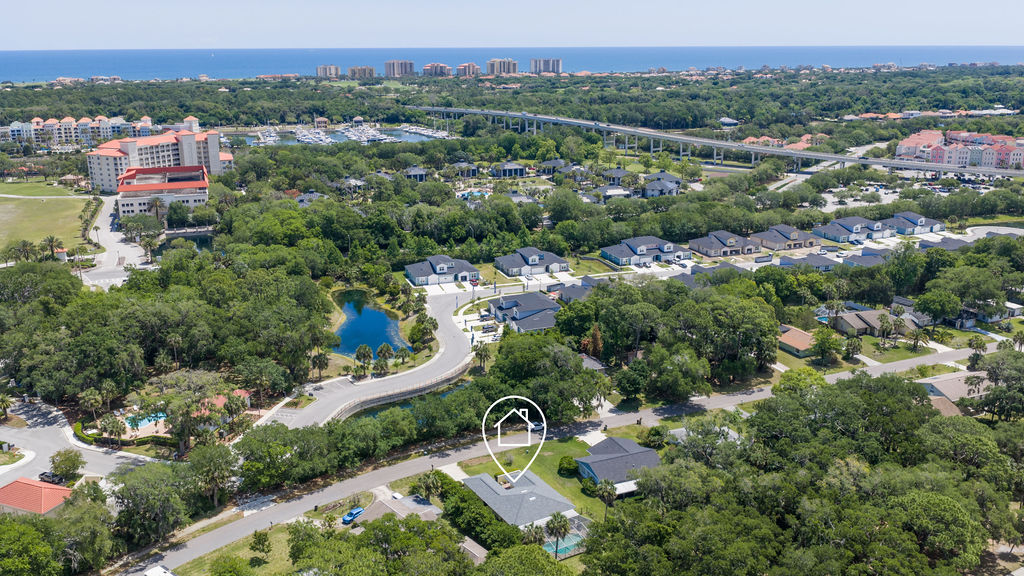

A 3-bedroom beachside property on South A1A in Flagler Beach should be a straightforward win. Oceanside location, good square footage, a small private patio. By any objective measure, it should be filling calendars easily during peak season.
When the owners came to us, they had a different reality: an occupancy rate of 51% in summer (well below the 80%+ typical for comparable properties in that location) and a review average that had dipped to 4.4 stars despite no obvious property deficiencies. Revenue in the prior year was $38,000 — a significant underperformance relative to the property’s true potential.
The Diagnosis
When we audited the property, the issues were clear:
Photography: Twelve photos, three of which were blurry. The best feature of the property — a view of the ocean from the second-floor bedroom — wasn’t photographed at all. The primary photo was a washed-out daytime shot of the living room.
Pricing: The property was priced at a flat $195/night year-round. During peak summer weeks when comparable properties were getting $350–$450/night, this property was either giving away revenue (if it filled) or not getting bookings because guests assumed the low price indicated a problem with the property.
Response time: The owner was managing the property part-time while running a separate business. Average response time to booking inquiries was 8–12 hours. On Airbnb, where response rate and time are ranking factors, this was actively suppressing visibility.
Listing content: No local recommendations, no specific details about the ocean view, no description of the walkability to Flagler Beach’s pier and restaurants — all significant selling points that weren’t being leveraged.
What We Changed
Photography
A full professional photo shoot, with the second-floor ocean view as the primary photo. We also captured a sunrise shot from the patio that became the secondary hero image. The final set was 38 photos.
Pricing
PriceLabs was calibrated to the Flagler Beach A1A comp set. Summer peak rates were raised to $340–$420/night depending on dates. Shoulder season was adjusted to a competitive range that filled efficiently without undercutting unnecessarily. Minimum stays were set at 3 nights with 2-night minimums for last-minute gaps.
Response and Communication
We took over all guest communications with a sub-1-hour response time during business hours. Within 30 days, Airbnb’s response rate metric for the listing returned to 100%.
Listing Rewrite
The listing title and description were rewritten to lead with the ocean view and the walkability advantage. The description specifically mentioned the 5-minute walk to High Tides, the Flagler Pier, and the Golden Lion — features that the previous listing didn’t mention at all despite them being major selling points.
The Results: Comparison Year
| Metric | Prior Year (Self-Managed) | First Year (Managed) |
|---|---|---|
| Gross Revenue | $38,200 | $52,400 |
| Annual Occupancy | 51% | 77% |
| Average Daily Rate | $195 | $285 |
| Summer Occupancy | 51% | 91% |
| Review Average | 4.4 ⭐ | 4.8 ⭐ |
The Lesson
A great location won’t save a poorly executed listing. And the difference between a 4.4-star property and a 4.8-star property often isn’t about the physical property at all — it’s about the management systems that surround it: how guests are communicated with, how quickly problems are fixed, and whether the experience meets the expectation set by the listing.
If your Flagler Beach or Palm Coast vacation rental is underperforming, the causes are almost always diagnosable and fixable. Reach out and we’ll take an honest look.